Kinky: etymology, meaning, and the culture of a word that defines a community
In recent years, the term kinky has increasingly entered everyday language, often used in a superficial or imprecise way. To truly understand its meaning, it is essential to start from its origin: kinky derives from the English word kink, which literally means a twist, knot, or bend in something that is supposed to be straight. As early as the 19th century, the term began to be used metaphorically to describe a deviation from the norm, a departure from expected linearity. It is precisely from this idea of “deviation” that the modern meaning develops: not something wrong, but something that exists outside dominant frameworks.
Throughout the 20th century, particularly from the 1960s onward, kinky became increasingly associated with non-conventional practices, desires, and identities, especially in relational and sexual contexts. However, reducing the term to a purely erotic dimension is limiting. Today, kinky represents a broader approach: a way of experiencing the body, relationships, and identity grounded in consent, communication, and awareness, as opposed to rigid or imposed models. In this sense, the term has gradually shed its negative or stigmatizing connotations, becoming instead a space of self-determination and recognition.
 Within this landscape, it is useful to distinguish—without rigid separation—the concepts of kinky, fetish, and leather. Kinky often functions as an umbrella term, encompassing a wide range of non-mainstream experiences. Fetish refers more specifically to attraction toward particular materials, objects, or dynamics, while leather represents a culture in its own right, with shared codes, aesthetics, history, and a strong sense of community. These dimensions frequently overlap: many individuals identify with more than one, contributing to a complex and layered reality that resists simplistic definitions.
This complexity is the key point: kinky is not a closed category, but an open space. It is where difference is not merely tolerated, but valued; where deviation from the norm ceases to be marginal and instead becomes a core element of identity. For many people, identifying as kinky means finally finding a language to describe themselves, but also—and perhaps more importantly—finding a community. Spaces, events, and social moments are therefore essential: they transform an abstract concept into a lived experience built on relationships, dialogue, and belonging.
Within this broader context, an increasingly relevant discussion concerns the potential inclusion of the “K” for kinky within LGBTQIAP+ acronyms. Some communities have begun to adopt extended forms such as LGBTQIAPK+ to explicitly acknowledge non-conventional identities and practices. This is a nuanced and sometimes debated issue. On one hand, including the K can be seen as an important step toward recognizing a part of the community that has historically shared spaces, experiences, and struggles with LGBTQIA+ individuals, contributing to the creation of safer environments and alternative cultural expressions. On the other hand, there is a legitimate consideration that kinky does not define a sexual orientation or a gender identity, but rather a set of practices and sensibilities, and that its inclusion within the acronym therefore requires careful reflection.
More than a formal question, this is a cultural and political one: including or excluding the K means asking which experiences we consider part of the community, and how we build spaces that are truly inclusive. In many contexts, the presence of kinky individuals within the LGBTQIA+ community is well established, as is the contribution that these subcultures have made—and continue to make—in terms of language, practices, and relational models centered on consent.
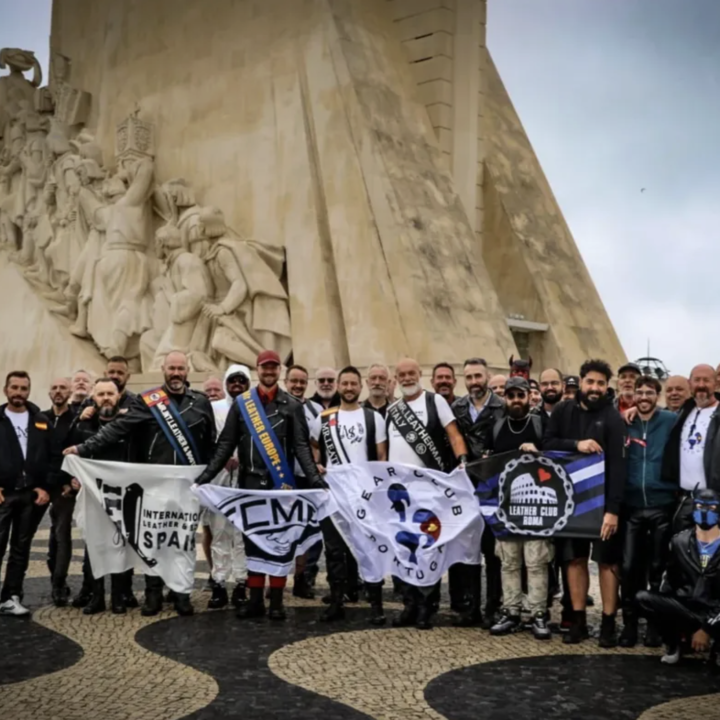
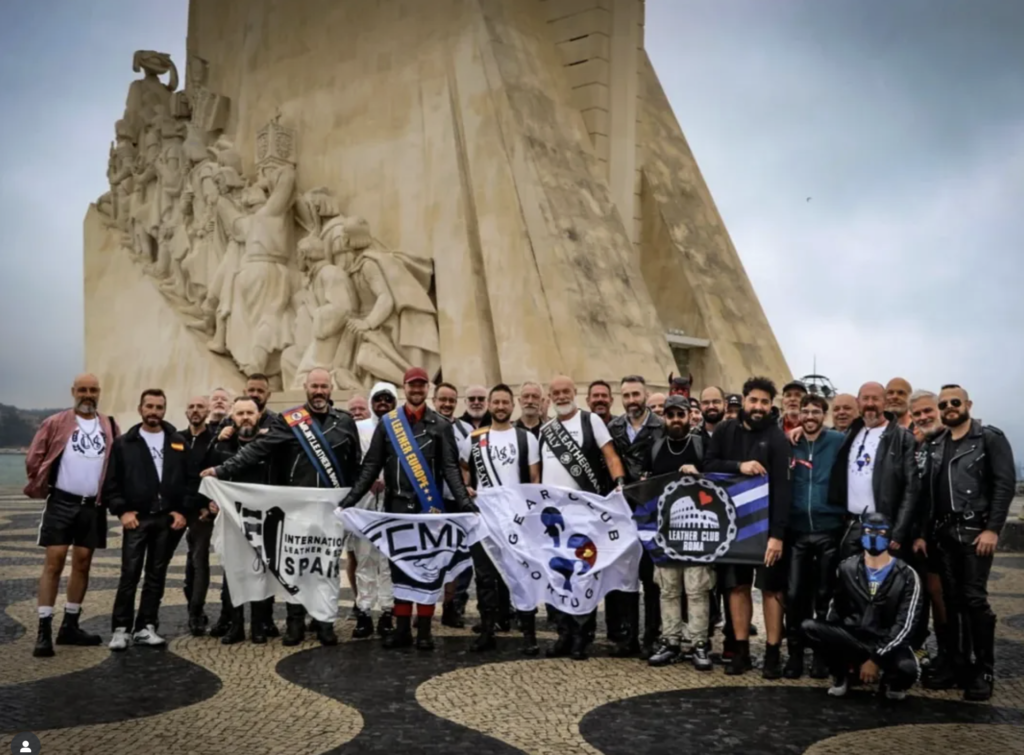
It is within this perspective that the Leather Club Roma has been working for years, promoting a vision of the fetish, leather, and kinky community as an integral part of a broader ecosystem of identities, experiences, and interconnected paths. Through events, cultural initiatives, and opportunities for gathering, the goal is not only to create moments of encounter, but also to foster a deeper reflection on what community, belonging, and representation mean today.
Giving the right meaning to words like kinky also means this: moving beyond simplifications, embracing complexity, and building spaces where every “bend” from the norm is not a reason for exclusion, but an opportunity for expression, awareness, and freedom.